


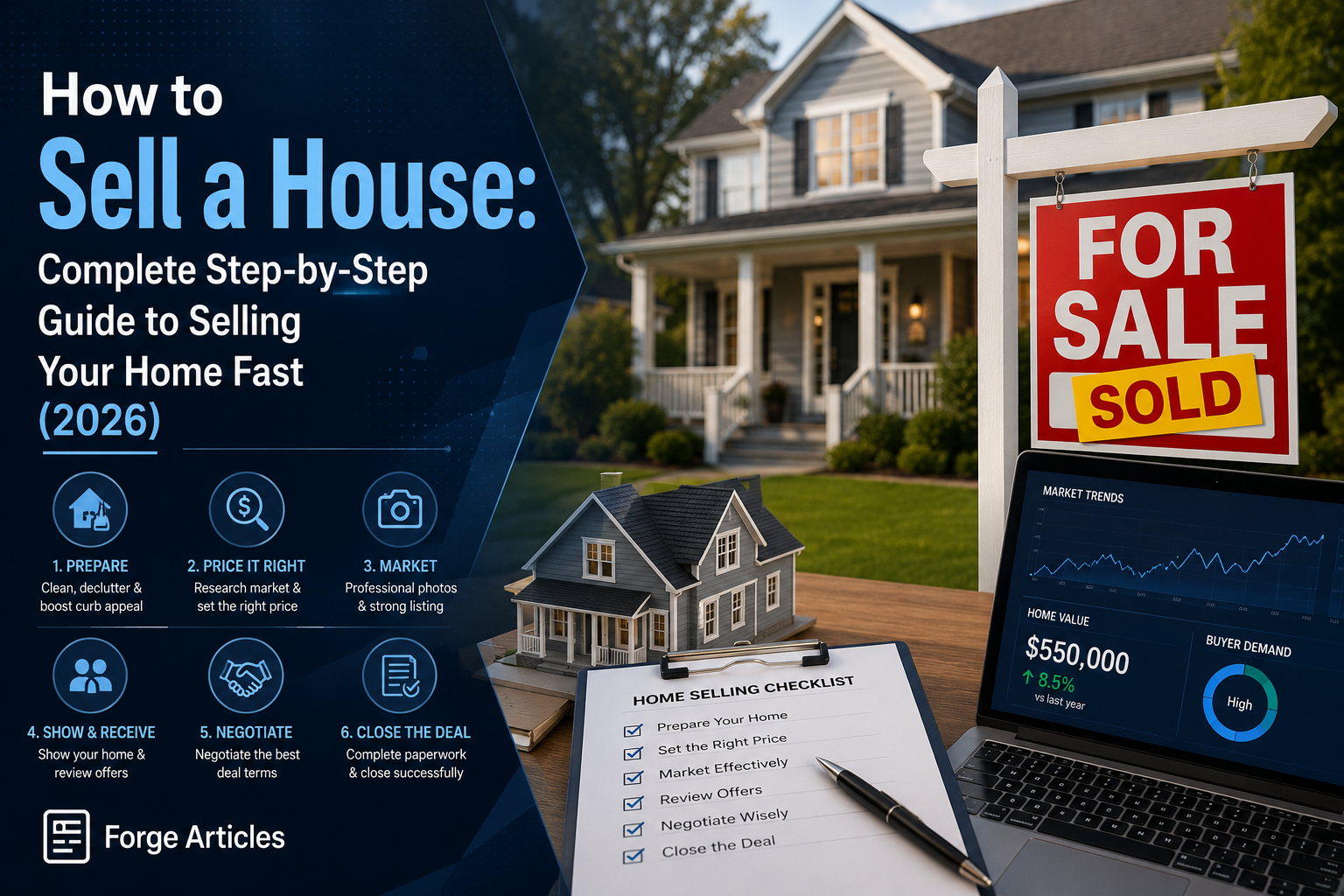
Introduction
Deciding how to sell a house is one of the most significant financial choices most individuals will ever face. Whether you’re transferring to another town, expanding into a bigger residence, reducing dimensions in anticipation of retirement, or liquidating an investment home, there’s considerably extra to it than the basic act of offering your house by posting an online listing. In today’s housing market, it’s harder than ever before.
Individuals searching have countless listings available to see online.
That implies consumers may experience neighborhood profiles, a mortgage calculator, virtual tours, and background information reports prior to you ever before make a call to get your home supplied. You have to have a method in place to engage ideal buyers and boost your home’s potential.
Many first-time sellers ask questions such as:
- How do I sell my house quickly?
- What’s the best way to price a home?
- Should I hire a real estate agent?
- Can I sell my house without an agent?
- What repairs should I make before listing?
- How do I negotiate the best offer?
- What costs should I expect when selling?
The exciting thing about how to sell a house is that it doesn’t need to be an experience that drains your energy or is riddled with costly mistakes. When you understand each step in the process and how to prepare your property, you will receive good offers and prevent common errors.
In this article, we will walk you through every major step necessary to sell a house. From preparation and pricing to marketing and closing, selling will feel less stressful as you understand each level of the sale. Selling your first home or your fifth, you will gain the knowledge you need to excel through the whole process.
What Does It Mean to Sell a House?
How to sell a house? Selling a house refers to the process in which the right of ownership and title over the property moves from one individual to another against compensation in the mutually determined form of sales price. The process might sound quite simple.
However, this usually encompasses the following significant stages:
- Preparing the property
- Determining market value
- Marketing the home
- Receiving offers
- Negotiating terms
- Completing inspections
- Finalizing legal documents
- Closing the transaction
Each stage plays an important role in determining how quickly your property sells, how to sell a house? and how much money you ultimately receive.
Why Proper Preparation Matters
However, many assume all the real estate agent has to do is justlist it, hope someone will find it and buy. That’s actually not true. A happy homebuyer will actually never see your listing in the first place if they’re sold the idea from the time they’re first looking to purchase!
Preparation helps:
- Increase buyer interest
- Improve first impressions
- Reduce time on the market
- Support stronger offers
- Minimize negotiation issues
- Build buyer confidence
A well-prepared home often stands out in competitive markets and can lead to a smoother selling experience.
Understanding Today’s Home Buyers
Modern buyers are more informed than ever.
Before contacting a seller, many buyers research:
- Property prices
- Neighborhood trends
- School ratings
- Crime statistics
- Public transportation
- Local amenities
- Mortgage rates
- sales
How to sell a house? As buyers conduct much of their research online, your listing must offer accurate details, desirable photos, and the right price from the start. Learning about what buyers look for can put Sellers in a more advantageous position.
When Is the Best Time to Sell a House?
Timing can have an effect on buyer demand and ultimately your selling price. Different times of year attract buyers regardless of where you live.
Spring
Spring is traditionally one of the busiest seasons for home sales.
Advantages include:
- Pleasant weather
- Better curb appeal
- Longer daylight hours
- Increased buyer activity
- Families planning moves before the next school year
Summer
Summer continues to be active in many markets.
Many buyers appreciate:
- Flexible vacation schedules
- Easier home viewings
- Favorable moving conditions
However, competition among sellers may also increase during this season.
Fall
There are generally fewer buyers this time of year when compared to Spring; however, interested buyers who mean business always persist in trying to snatch up properties and aim to finish transactions before the holidays begin.
Winter
How to sell a house? Number of homes For Sale. When interest may be somewhat down across some markets, sellers with properly presented homes will have a market. This is where there may be fewer homes in the market, and buyer motivation is still high and competition a little low.
Step 1: Understand Your Local Real Estate Market
Before listing your property, take time to research the current market.
Key factors include:
- Average selling prices
- Days on market
- Buyer demand
- Inventory levels
- Mortgage interest rates
- Recent comparable sales
How to sell a house? A seller’s market (Demand > Supply): These markets mean quick sales with confident offers. In buyer’s markets (Supply > Demand), pricing is key. Both states set expectations appropriately.
Step 2: Determine Your Home’s Value
Perhaps most importantly, you’ll need to decide how much to ask for. Setting the price too high can put off potential buyers, while setting it too low can cost you in the long run. Property values depend on several things:
Location
One of the most important deciding factors in home value is the locale it’s established within.
Buyers often consider:
- School districts
- Public transportation
- Shopping centers
- Parks
- Healthcare facilities
- Employment opportunities
- Neighborhood reputation
Property Size
Most of all, house sizes lead to a higher price, but functionality and layout can also play a big role.
Important measurements include:
- Total living area
- Number of bedrooms
- Number of bathrooms
- Garage size
- Lot size
Home Condition
Property that looks cared for tends to get a much better response.
Buyers often notice:
- Roof condition
- Flooring
- Paint quality
- Kitchen updates
- Bathroom renovations
- HVAC systems
- Plumbing
- Electrical systems
Comparable Sales (Comps)
Sales in your area of similar property will help you determine your pricing.
Comparing homes with similar:
- Size
- Age
- Features
- Condition
- Location
helps establish a realistic market value.
Step 3: Decide Whether to Hire a Real Estate Agent
Many sellers choose to work with experienced real estate professionals.
An agent may assist with:
- Market pricing
- Marketing strategy
- Professional photography
- Buyer communication
- Scheduling showings
- Negotiating offers
- Managing paperwork
- Coordinating closing
Despite that, some people choose how to sell a house on their own. Typically this strategy is called For Sale by Owner, or the “FSBO.” Each strategy presents advantages; however, drawbacks may seem to make them even more attractive. That’s why we will weigh both options more deeply in the following parts.
Step 4: Prepare Your Home Before Listing
First impressions have a significant impact on a potential buyer. Some sources and research indicated preparing each room of your home in meticulous detail before you have it photographed or listed as for sale.
Declutter
Clear clutter to make everything look clean and open up the space. Buyers can clearly picture themselves in their new home.
Deep Clean
A properly cleaned house can really help create a stronger statement.
Pay special attention to:
- Kitchens
- Bathrooms
- Windows
- Floors
- Baseboards
- Appliances
Complete Minor Repairs
Minor repairs can also make potential buyers wonder how much effort was put in.
Consider fixing:
- Leaky faucets
- Loose door handles
- Cracked tiles
- Damaged paint
- Squeaky doors
- Broken light fixtures
Improve Curb Appeal
The exterior is our first impression.
Simple improvements include:
- Fresh landscaping
- Trimmed grass
- Pressure washing
- Fresh mulch
- Painted front door
- Clean driveway
- Healthy plants
A welcoming exterior encourages buyers to explore further.
Step 5: Stage Your Home for Maximum Appeal
Home staging is staging as is where potential buyer should imagine how great the opportunities are to buy this house.
Effective staging focuses on:
- Neutral colors
- Bright lighting
- Minimal clutter
- Comfortable furniture placement
- Attractive décor
- Open spaces
The strategy is to draw attention to the house’s advantages, and let the potential buyers see their own stuff placed in these locations.
Common Mistakes Sellers Make Before Listing
A large number of homeowners unconsciously turn away a buyer with easy-to-avoid mistakes.
Examples include:
- Overpricing the property
- Ignoring repairs
- Using poor-quality photos
- Leaving excessive personal items visible
- Skipping professional cleaning
- Not researching the local market
- Listing before the home is fully prepared
By not making these errors, you will greatly increase the likelihood of a sale.
Seller Preparation Checklist
Things to have ready when you sell:
- Researched your local market
- Estimated your home’s value
- Decided whether to use an agent
- Completed essential repairs
- Deep cleaned the property
- Improved curb appeal
- Decluttered every room
- Organized important property documents
- Planned your pricing strategy
Doing these three steps successfully is key to the entire sales cycle and sets you up well for everything that comes after.
Step 6: Price Your House Correctly
How to sell a house? Pricing the house right is one of the most critical choices you need to make when selling. But it may take you a while to have offers at hand when your stunning house is overpriced, and even overpricing can minimize your profit margin.
What can be a successful strategy?
Here’s how smart pricing helps: Draws attention of serious buyers.
The right pricing draws more highly qualified prospects to consider your property. Higher showing appointments. A well-priced home will be viewed more frequently by the prospects, resulting in higher frequency of viewing appointments. Multiple offers.
Sometimes you will get more than a bid when the price fits their needs well.
Factors That Affect Home Pricing
When determining your asking price, consider:
- Recent comparable home sales
- Neighborhood demand
- Property size
- Number of bedrooms and bathrooms
- Lot size
- Age of the home
- Renovations and upgrades
- School districts
- Local amenities
- Current mortgage interest rates
Aims to price your house correctly, not emotionally.
Should You Get a Professional Home Appraisal?
An unbiased professional estimate is the market value of your property.
An appraiser takes into account several components including:
- Interior condition
- Exterior condition
- Square footage
- Structural quality
- Recent neighborhood sales
- Market trends
An appraisal may not be necessary before you list your property, but knowing your property’s value can assure you when it comes to setting a price.
Step 7: Take High-Quality Photos
The majority of buyers begin their property search on the Internet, which means that photography has been described as arguably one of the best marketing tools.
Bad photos can quickly put prospective buyers off your property before they even get to reading your listing description.
Tips for Better Listing Photos
- Photograph during daylight hours.
- Open curtains and blinds for natural light.
- Remove clutter from every room.
- Capture wide-angle views.
- Highlight unique features.
- Clean windows before shooting.
- Include exterior photos from multiple angles.
Professional photos lead to increased activity and showings.
Consider Virtual Tours
The attraction of virtual tours is the chance to tour an asset from afar.
Benefits include:
- More qualified buyers
- Fewer unnecessary showings
- Better online engagement
- Increased buyer confidence
Many buyers now expect virtual tours, especially for higher-value properties.
Step 8: Write an Effective Property Listing
Your listing description is more than a list of rooms; it helps buyers visualize themselves living in that house.
Include Important Details
Mention:
- Square footage
- Bedrooms
- Bathrooms
- Garage
- Lot size
- Renovations
- Energy-efficient features
- Outdoor spaces
- Nearby schools
- Shopping and transportation
Avoid exaggerated claims and focus on accurate, useful information.
Step 9: Market Your Home
Just listing a home is no longer adequate in this market. An effective marketing plan targets buyers via multiple channels.
Online Real Estate Portals
Most buyers search online first.
Make sure your listing includes:
- Clear photos
- Accurate information
- Competitive pricing
- Contact details
Social Media Marketing
You can expose more potential viewers on social sites like YouTube, Instagram, and Facebook.
Popular content includes:
- Short walkthrough videos
- Before-and-after renovation photos
- Neighborhood highlights
- Property tours
Email Marketing
Most real estate agents email interested buyers with a list of new homes available through email marketing newsletters. This can create a lot of immediate interest from home buyers who are active.
Local Marketing
Don’t overlook traditional marketing methods.
These may include:
- Yard signs
- Community notice boards
- Local newspapers
- Neighborhood groups
There isn’t really a silver bullet for marketing – that’s why the combination of online and offline often results in the highest conversions.
Step 10: Schedule Home Showings
When potential buyers express interest, schedule showings of the property.
Prepare Before Every Showing
Before visitors arrive:
- Clean every room.
- Turn on lights.
- Open curtains.
- Eliminate unpleasant odors.
- Secure valuables.
- Remove personal items.
When you have positive surroundings, buyers are more comfortable and concentrate on what’s great about the house.
Host an Open House
In an open house, many people can view your property.
Advantages include:
- Increased exposure
- More buyer feedback
- Greater competition
- Efficient scheduling
While not essential for all properties, open houses do generate extra interest.
Step 11: Review Offers Carefully
Receiving an offer is exciting, but price shouldn’t be your only consideration.
Evaluate:
- Purchase price
- Financing method
- Earnest money deposit
- Inspection contingencies
- Closing timeline
- Buyer qualifications
Sometimes the highest offer isn’t necessarily the strongest offer.
Understanding Contingencies
Many offers to purchase have contingencies that must be completed before closing can take place.
Common offer contingencies can include:
Financing Contingency
The purchaser must get the mortgage approval.
Home Inspection Contingency
The buyer may ask you to make repairs based on an inspection.
Appraisal Contingency
The house must appraise for what you’re selling it for.
Sale of Existing Home
Many buyers are coming from selling their own home, so they may need to sell their house first.
Knowing these things can help both parties decide if an offer is a good contract to sign.
Step 12: Negotiate With Confidence
Negotiating the sale of a home is standard practice.
The following are some typical areas for negotiation:
- Sale price
- Closing costs
- Repairs
- Appliances
- Closing date
- Furniture
- Home warranties
Make sure to remain flexible but keep your eyes on the prize, which is your financial goals.
Professionalism can go a long way in these discussions, leading to a win-win scenario for both buyer and seller.
Responding to Low Offers
Low offers are not necessarily a sign of a buyer’s lack of interest.
- Making a counteroffer
- Requesting revised terms
- Asking for proof of financing
A more productive approach to negotiating would be developing a partnership-based conversation, which will lead to a satisfactory deal for both sides.
Step 13: Prepare for the Home Inspection
The majority of buyers request a professional home inspector’s assessment.
- Roof
- Foundation
- Plumbing
- Electrical systems
- HVAC
- Windows
- Doors
- Insulation
- Appliances
Therefore, being knowledgeable about the subject can help during the evaluation.
There is a long list of possible issues that an inspector may find, so it is important not to be surprised by a few minor ones. However, regular maintenance can prevent many common problems.
Common Repair Requests
Buyers frequently request repairs involving:
- Roof leaks
- Plumbing issues
- Electrical safety concerns
- HVAC maintenance
- Water damage
- Structural concerns
Sellers may:
- Complete repairs
- Offer repair credits
- Negotiate a price adjustment
Step 14: Home Appraisal
If the buyer uses financing, the lender usually wants to order an appraisal.
The appraiser determines what the expected selling price of the property should be.
There are various scenarios for the seller depending on what price the house is appraised for:
- Buyer increases down payment
- Seller lowers the price
- Parties renegotiate
- Buyer cancels under the appraisal contingency
Accurate pricing from the get-go will help prevent appraisal problems.
Step 15: Understand Closing Costs
Many times, people place all their eggs in the sale price, instead of the true costs of sale.
Expenses such as these may apply to you depending on your location and the sale agreements you choose:
- Real estate commissions (where applicable)
- Attorney or legal fees
- Transfer taxes
- Title fees
- Mortgage payoff
- Recording fees
- Repairs agreed during negotiations
These costs can add up, so it’s good to be aware of them when considering how to sell a house.
Selling a House Without a Real Estate Agent (FSBO)
Some homeowners prefer to sell their properties on their own rather than pay commissions to real estate agents.
Potential Benefits
- Greater control over the process
- Possible commission savings
- Direct communication with buyers
Potential Challenges
- Pricing accurately
- Marketing effectively
- Managing paperwork
- Negotiating offers
- Understanding legal requirements
In fact, For Sale By Owner (FSBO) may be a good option for many home sellers; however, first-time sellers should take a hard look at their ability to handle the task before deciding to sell without the help of a real estate agent.
Common Marketing Mistakes to Avoid
Many listings fail due to errors.
Avoid:
- Low-quality photos
- Incomplete property descriptions
- Unrealistic pricing
- Poor communication with buyers
- Delayed responses
- Ignoring buyer feedback
- Limited marketing exposure
Good presentation, along with good communication, can help attract many buyers.
Step 16: What Happens After Accepting an Offer?
Accepting an offer does not mean that the sale is done. There are still several steps to take before the property changes hands.
Both parties must fulfill several conditions for the purchase to be completed.
A typical timeline includes:
- Purchase agreement signed
- Earnest money deposit submitted
- Home inspection completed
- Appraisal (if financing is involved)
- Title search
- Mortgage approval
- Final walkthrough
- Closing day
Responding promptly to requests from your agent, attorney, or title company can save you time.
Understanding the Escrow Process
In many cases, an independent escrow or settlement company holds the documents and the money from the sale of your home until all requirements of the sale are fulfilled.
In How to sell a house? Escrow serves to protect the buyer and the seller by ensuring that both parties fulfill their obligations under the sales contract.
In other words, you pay your commission to the escrow agent, and he/she will be able to pay it to your real estate agent when the closing is done
Typical responsibilities include:
- Holding earnest money
- Managing transaction documents
- Coordinating with lenders
- Preparing closing paperwork
- Distributing funds after closing
While there may be variations across different countries and regions, the goal of the process is universal, and it is to ensure a smooth transfer of ownership.
Step 17: Prepare for Closing Day
The actual closing day is when the buyer officially takes possession of the property.
Before closing, sellers should:
- Confirm the closing date and time.
- Gather required identification.
- Review settlement documents carefully.
- Arrange for utility transfers.
- Remove all personal belongings unless otherwise agreed.
- Ensure agreed repairs have been completed.
- Prepare keys, garage remotes, and access codes.
Being organized can help tremendously when it comes to minimizing the stress associated with the process.
Final Walkthrough
Most buyers conduct a final walkthrough before closing.
The purpose is to confirm that:
- The property is in the agreed condition.
- Required repairs have been completed.
- Included appliances remain in the home.
- No unexpected damage has occurred after inspections.
It’s a good idea to leave the house prepared so that you don’t end up in an argument.
Moving Out Efficiently
Planning ahead of time can make your transition much easier.
You can even make a moving checklist!
- Hiring movers (if needed)
- Packing non-essential items in advance
- Updating your mailing address
- Canceling or transferring utilities
- Cleaning the home after moving
- Organizing important documents
A clean house always makes a good first impression, but it also makes a great last impression too.
Taxes and Legal Considerations
Tax laws and legalities are different for every country, state, or locality.
Before selling, owners should become familiar with possible obligations including:
- Capital gains taxes
- Transfer taxes
- Mortgage payoff requirements
- Local disclosure laws
- Property transfer documentation
Because of the complexity, it is advisable to contact a qualified real estate lawyer or tax consultant and inquire about particular localities and your own tax situation.
Common Mistakes Sellers Make After Accepting an Offer
Many transactions get delayed due to a seller’s assumption that the hard work is over once he/she has got an offer accepted.
Avoid the following:
Delaying Required Paperwork
Do not ignore requests from attorneys, title companies, or agents.
Ignoring Inspection Requests
Address agreed repairs within the required timeframe.
Missing Deadlines
Real estate contracts often include strict deadlines for inspections, financing, and document submission.
Moving Out Too Early
Unless agreed otherwise, remain available until closing is finalized.
Damaging the Property
Continue maintaining the property until ownership officially transfers.
Expert Tips to Sell Your House Faster
Although every market is different, the following advice is presented by many professional real estate agents around the country:
Price Competitively
Houses that are priced right from the start have a more favorable response than those that are overpriced and then reduced
Make sure to clean up and stage the house.
Invest in Curb Appeal
Simple improvements, such as fresh flowers and a new paint job on the front door, help set the tone.
Use Professional Photography
High-Quality Images Attract More Views Online And Encourage Many Buyers To Set Up Showings.
Be Flexible With Showings
The Easier You Make It For Potential Buyers To View Your House, The More Offers You Will Get.
Respond Quickly
Quick Responses Show You Are A Professional And Help Generate Interest In The Property.
Keep the Home Clean
Keeping the property clean assures that it is ready for unexpected showing requests at any time.
Highlight Energy-Efficient Features
Many buyers appreciate:
- Solar panels
- Smart thermostats
- Energy-efficient windows
- Updated insulation
- Modern HVAC systems
These features can make your property more attractive in competitive markets.
Frequently Asked Questions
How long does it usually take to sell a house?
The time it takes to how to sell a house depends on many factors, including local market conditions, price, and property condition, as well as buyer demand. In some cases, properties can be sold within days, while in other cases, they may take weeks or even months.
Should I renovate before selling?
It is not mandatory to renovate a house before putting it on the market. The most cost-effective improvements are those that fix defects or make repairs, as well as clean the property.
Can I sell my house without a real estate agent?
Yes, this listing type is often referred to as For Sale By Owner (FSBO). Although in this case, how to sell a house? the seller must handle all the details of the sale himself, including pricing, marketing, and negotiating, plus he is obliged to manage all the associated paperwork and legal details on his own.
How do I determine my home’s value?
You may want to look at similar properties, seek professional advice on the value of your property, and turn to local experts for assistance
What documents are usually required?
Requirements vary by location but often include:
- Proof of ownership
- Government-issued identification
- Mortgage information
- Property tax records
- Disclosure forms
- Purchase agreement
Should I accept the first offer?
Not necessarily. Consider the offer price, ability to finance, contingencies, and closing period, rather than focusing on low prices alone.
What is earnest money?
Earnest money represents funds that the buyer deposits with the agent/closing company as a demonstration of his/her commitment to buy the property at the price stated in the contract.
What happens if the inspection finds problems?
The buyer can ask for repairs, request a credit, ask for a price reduction, or walk away as per the terms of the contract.
Can buyers negotiate after the inspection?
Yes. An inspection often creates further negotiations on repairs or credits.
Who pays closing costs?
Responsibility depends on local customs and the purchase agreement.
Should I leave appliances?
Agreements are individualized between the buyer and seller; therefore, it is important to note everything that is included in the offer.
How important is home staging?
Homes that are well staged tend to make a good first impression, thereby attracting more buyers.
What if my house isn’t selling?
Consider reviewing:
- Pricing strategy
- Listing photos
- Property description
- Marketing exposure
- Home condition
- Buyer feedback
Adjustments in these areas may improve results.
Is spring always the best time to sell?
While Spring is typically a busy time for the market, depending on the local economy, inventory levels, and buyer demand, timing can be everything. Knowing the right time to sell is essential and should be based on numerous factors.
How can I maximize my selling price?
Focus on:
- Competitive pricing
- Property presentation
- Professional marketing
- High-quality photography
- Prompt communication
- Skilled negotiation
Final Thoughts
Selling your home is much more than just putting a “For Sale” sign in your front yard (how to sell a house?). It’s an involved process that requires elbow grease, knowing when to discount, and a keen eye for detail to get the most competitive price. Whether you hire an agent or go it alone, it’s helpful to have an understanding of the real estate sales process and how to take control and maximize your profits. From fixing up the exterior to attract buyers, to knowing how to negotiate, and everything in between, the amount of time and thought put into the sale of your home can affect how quickly you sell and how much you make.
While markets fluctuate throughout the year, the fundamentals of how to sell a house remain constant. Your home’s value should be priced correctly to attract buyers, and you should stage your home to help buyers envision themselves in the property. From there, the key to a smooth sale is being able to communicate effectively with buyers and their agents while maintaining control over the sale and protecting your interests. By following these tips from our complete guide on selling your home, you’re sure to make the most of your sale.
