


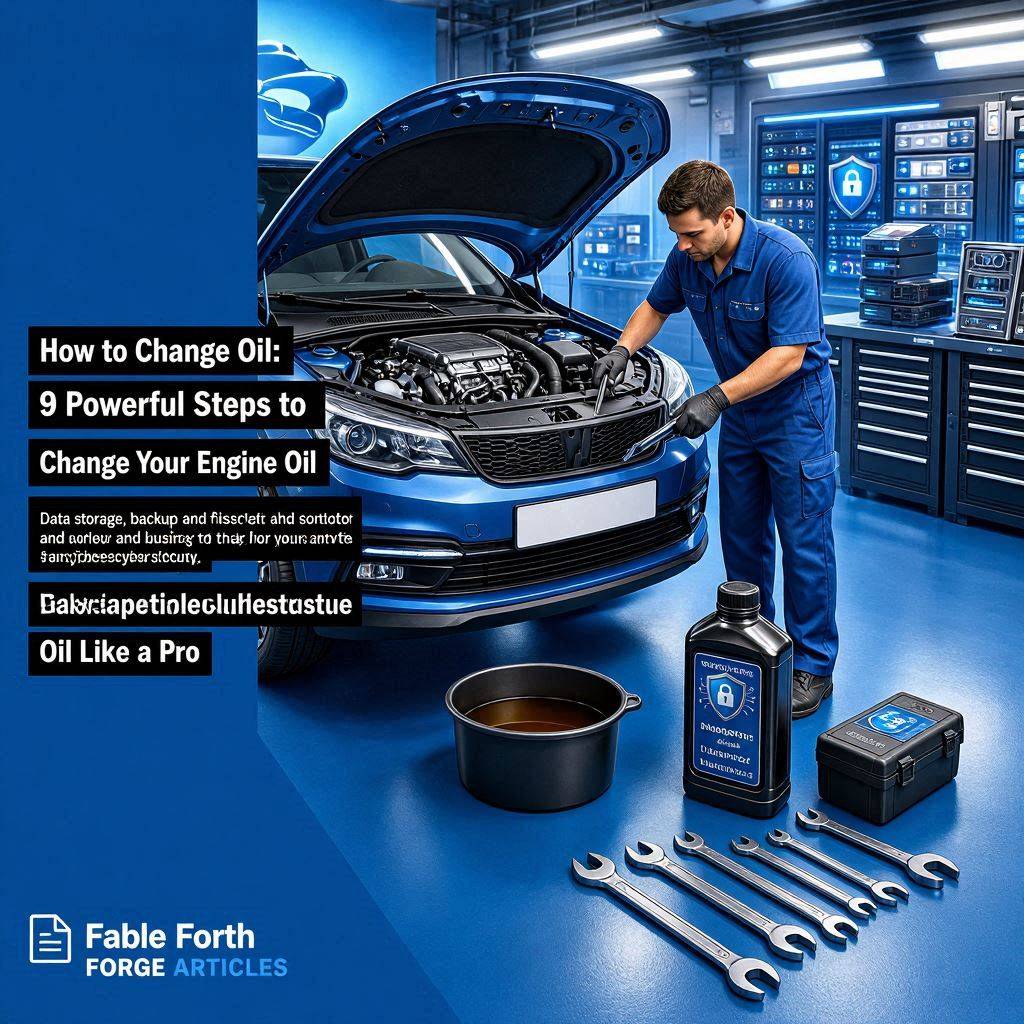
Knowing how to change oil is one of the most practical skills that every car owner can learn. Regular how to change oil in many purposes, and these include keeping the engine internally clean, reducing friction between working components, improving fuel economy, and prolonging the life of the car as a whole. Although most people choose to take their vehicles to a service center for regular changes, the task of changing the engine oil can in fact save you cash and teach you a great deal about your car.
Your engine in its modern form depends on clean motor oil to both lubricate and protect its many moving parts from being seriously worn away. Over time, the motor oil tends to break down as it is subject to dirt, contaminants, and heat. If this occurs frequently, the motor oil is unable to sufficiently lubricate the engine, resulting in increased wear and decreased efficiency. In the worst cases, failure to change the motor oil appropriately can necessitate an expensive engine repair.
This guide is a step-by-step explanation of how to change oil in the engine correctly and safely. You will cover the items needed, how to ready the vehicle, the steps to be followed, and common errors to avoid.
Why Changing Engine Oil Is Important
Engine oil has some specific roles and it allows your vehicle’s engine to operate smoothly and cool. If you don’t maintain clean oil the engine internal moving components will rub against each other, generating excess heat and eventual wear over time.
These include the following benefits?
- Protect engine components from wear
- Improve fuel efficiency
- Reduce engine sludge
- Maintain proper lubrication
- Help regulate engine temperature
- Extend engine lifespan
- Support smoother engine performance
By performing maintenance on your vehicle as scheduled by your manufacturer it will help protect your investment more easily.
Signs Your Vehicle Needs an Oil Change
With that said…it might also be a reason for your car to require unnecessary motor damage which can be easily identified. Some of the symptoms below can also indicate that the time has come for you to learn how to change oil, or to schedule an oil Change.
1. Oil Change Warning Light
These days, almost all vehicles have an oil light that will glow in your dash or a digital alert reminding you of maintenance or a warning that your vehicle may have oil trouble. If it goes off on your vehicle, you want to read your owner’s manual and check your vehicle’s oil level.
2. Dirty or Dark Oil
When oil is new, it should have an amber tone. Dirty oil begins to accumulate combustion particles and other junk that accumulates during regular oil cycles. You will see this because dirty oil starts to look thick and also gets a really dark shade and this dipstick that we usually all can do is to look at your engine with the check dipstick. If your oil looks dark, it is time to replace your oil.
3. Increased Engine Noise
Clean engine oil reduces friction between the various parts within your car engine. If your engine’s oil is old and dirty, then you might find that your engine sounds noisy when it is in operation and possibly develops a small knocking sound.
4. Burning Oil Smell
An obvious smell of burnt oil inside the vehicle and outside the vehicle might suggest oil contamination or oil leak into your exhaust system or around you car exterior parts as you as you accelerate or even on just moving as soon. You have a oil related incursion that must be promptly addressed in an attempt to protect the health of your car.
5. Reduced Fuel Efficiency
Older engine oil adds to friction with inside your own. A bit dirty old oil might mean it’s a chance to install new one which will improve your own engine output.
Tools and Materials You’ll Need
Just to ensure, that the job actually gets done right – collect everything necessary for the how to change oil process before even getting down to business.
For you, at the very least you will need:
- Correct engine oil
- New oil filter
- Oil filter wrench
- Socket wrench
- Drain pan
- Funnel
- Jack and jack stands (if required)
- Wheel chocks
- Gloves
- Shop towels or paper towels
- Safety glasses
Before you get started, have everything in place to ensure safety and ease when following directions.
Choosing the Right Engine Oil
Is the choice of engine oil as essential as changing it? Absolutely! To figure this out, you should always refer to the following from your car owner’s manual:
- Recommended oil viscosity
- Oil capacity
- Required oil specifications
- Manufacturer-approved oil type
Popular oils are:
Conventional Oil
Great choice for many classic/older vehicles and general driving environments.
Synthetic Blend Oil
Better protection then average oil at minimal costs.
Full Synthetic Oil
Offer superior protection against heat and wear and sludge. New many newer cars need full synthetic oil to maintain highest performance. Running too rich or not rich enough could cut engine life.
How to Change Oil Step by Step
Learning how to change oil becomes much easier when each step is completed carefully.
Step 1: Prepare the Vehicle
Park in a level spot. If the engine was running before you parked it, let it cool down a little.
Release the parking brake and get all necessary tools. If necessary to raise your vehicle, put it up on a jack and jack stands. NEVER go under a vehicle that is supported only by a hydraulic jack.
Step 2: Locate the Oil Drain Plug
Place your oil drain pan directly underneath the engine. Find the drain plug at the bottom of the oil pan. Gradually loosen this plug with the correct socket wrench while noting if the engine oil might still be warm.
Wait until all old engine oil has drained into your catch pan, then begin to replace the plug.
Double-check your drain plug’s washers – this is what it uses to form a tight seal, so replace it if the old one seems worn or damaged.
Step 3: Remove the Old Oil Filter
The next step in how to change oil is replacing the oil filter.
Remove the filter. If necessary, an oil filter wrench can make this step easier. Turn the filter counterclockwise until it starts to loosen. The filter should be removable with your hand from here on out.
Note: Be sure you keep your drain pan in place as some oil may escape during this step.
Installation Prep (Before Installing the new filter):
- Remove the old gasket if it remains attached.
- Apply a thin layer of fresh oil to the new filter’s rubber gasket.
- Tighten the new filter by hand according to the manufacturer’s instructions.
Proper installation helps prevent leaks after the engine starts.
Step 4: Add Fresh Engine Oil
Pull off the engine oil filler cap that’s on top of the engine. Put a funnel into the oil hole to prevent the oil being splattered everywhere. Slowly add into the engine what feels to be the correct quantity of new engine oil.
Following putting in:
- Replace the oil cap securely.
- Start the engine for approximately 30 to 60 seconds.
- Turn the engine off.
- Wait a few minutes.
- Check the oil level using the dipstick.
Add small quantities of oil if need until desired level is reached.
Make sure you do not over-fill since excess oil will interfere with engine work as well.
Step 5: Check for Oil Leaks
Add a little oil, Start and let the engine run around 1 minute.
While let run the Engine, check your Area around:
- Oil drain plug
- Oil filter
- Oil pan
If they don’t tighten the oil plug, the car might leak oil. You might check under your car if your oil plug is secure and if the car has a tight oil filter.
Step 6: Verify the Oil Level
When the engine is cool-five minutes or so –switch it off in the meantime. Take out the dipstick, then wipe the tip until clean. Put it back in, push in firmly to ensure it goes to the full depth and pull it out again.
Oil must stay above MIN and below MAX on the dipstick scale.
Top up with a small addition, then test again, as too much oil is worse than too little as there could be high pressure build up within the engine, making it perform very poorly.
Step 7: Reset the Oil Change Reminder
The majority of current vehicles come equipped with an oil life indicator system. Once completed, reset the oil maintenance monitor according to the procedure within your owners manual. By doing so, you can accurately monitor your next scheduled maintenance.
Step 8: Dispose of Used Oil Properly
Never spill used engine oil onto the ground, down a drain, or put it in your household trash.
Instead:
- Pour the old oil into a sealed container.
- Place the used oil filter in a leak-proof bag or container.
- Take both items to an authorized recycling center or automotive parts store that accepts used motor oil.
How to dispose of of itemsProper disposal ensures safety for individuals and the environment, and legal compliance.
Step 9: Record Your Maintenance
When you’re finished with how to change oil, one of the last steps is a log.
Write down:
- Date of the oil change
- Vehicle mileage
- Oil type used
- Oil viscosity
- Oil filter brand
Keeping accurate logs can assist you in planning for future maintenance and also allow you to maintain an excellent trade in price for your vehicle.
Common Mistakes to Avoid
As you can see, some errors occur even when done by the most experienced vehicle owner. They can still do these things during an oil change.
Using the Wrong Oil
Make sure to use the appropriate grade and specification for your vehicle recommended by your manufacturer.
Forgetting to Replace the Oil Filter
How to change oil: To change old oil without changing the old filter would not make sense.
Overfilling the Engine
Do not add too many amounts of oil since that will contribute to the increasing of crankcase pressure which subsequently reduces engine function. – Always confirm level from dipstick prior to topping up.
Under-Tightening or Over-Tightening Components
Tighten up drain plug and oil filter per manufacture and DO NOT over-tighten. This will damage the threads or seals.
Ignoring Oil Leaks
Have to look under you vehicle every time you are done with your oil. Sometimes little leaks can get big if they do not get caught and serviced immediately.
How Often Should You Change Oil?
Perhaps, the biggest question most get after finding how to change oil is about the interval at which such an oil change must take place.
That, of course, is influenced by numerous aspects such as the:
- Vehicle manufacturer recommendations
- Oil type
- Driving conditions
- Climate
- Vehicle age
General guidelines include:
- Conventional oil: approximately every 3,000–5,000 miles
- Synthetic blend oil: approximately every 5,000–7,500 miles
- Full synthetic oil: approximately every 7,500–10,000 miles (or as recommended by the manufacturer)
Always consult your vehicle’s owner’s manual for the schedule that is appropriate for your vehicle.
Benefits of Regular Oil Changes
Here are some of the many benefits of changing your engine oil when necessary:
Some of the benefits include:
- Better engine protection
- Improved fuel efficiency
- Reduced engine wear
- Cleaner engine components
- Lower maintenance costs over time
- More reliable vehicle performance
- Longer engine lifespan
Even scheduled servicing is less expensive than engine repair stemming from unattended how to change oil.
Safety Tips
When working on your vehicle, it is vital that you take as many safety precautions as possible.
Consider using the tips below:
- Allow the engine to cool before beginning.
- Wear gloves and safety glasses.
- Work on a level surface.
- Use approved jack stands if lifting the vehicle.
- Keep children and pets away from the work area.
- Clean any oil spills immediately to prevent slips.
Using some simple measures will also ensure more safety and efficiency overall.
Frequently Asked Questions
Is it difficult to learn how to change oil?
- Unless your car is very new, most can be how to change oil by most vehicle owners with tools, a bit of patience, and reading the vehicle manufacturer’s recommendations.
Can I change my engine oil without replacing the filter?
It is a wise practice to replace the oil filter every time you get an engine how to change oil, so that you keep optimum protection of your engine.
What happens if I delay an oil change?
Old oil will just no longer adequately do what it’s made to. Waiting to perform a regular oil change can only result into even greater wear-and-tear on your car’s engine, decreasing fuel performance, and ending up in a significant investment for car repair services.
How long does an oil change take?
An engine oil change generally takes anywhere from 30 to 60 minutes for most cars but will change according to how quickly you are and your car’s setup.
Should I use synthetic or conventional oil?
Never depart from your vehicle owner’s handbook, and know this one fact: the newer the automobile, and then there’s increasingly the chance it’s optimized to operate with full synthetic motor oil.
Final Thoughts
How to change oil? In Changing the Oil: An Auto Repair Guide. Performing regular oil changes is one of the more basic yet vital forms of automotive maintenance.
Whether you spend your commute in traffic to get to and from work every day or use your vehicle only for weekly errands, regularly: how to change oil prolongs engine life and promotes optimal vehicle operation. 2. Acquire Proper Oil. The right kind of how to change oil is one crucial item.
