


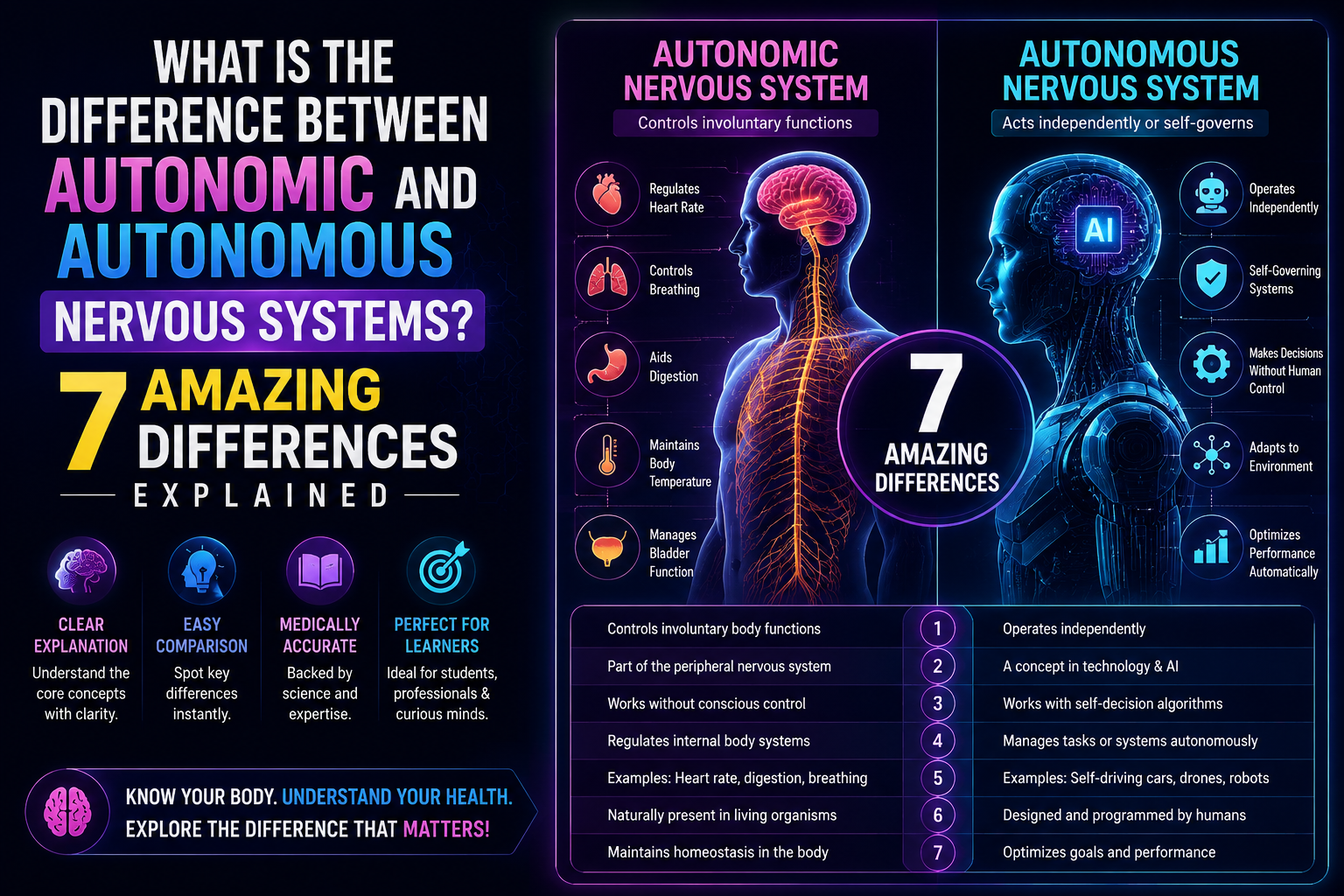
The autonomic and autonomous nervous systems both relate to automation in our body, but although their names are so close, they do not mean the same thing. This is essential to understanding our bodies (as well as many other areas of human physiology and health).
What does Autonomous mean?
Autonomous can mean “self-governing” and can often apply to technology; for example, we could discuss an “autonomous car”, which can navigate its own path without human guidance, or an “autonomous system” (a program that can execute commands) working automatically.
This meaning applies to Biology and Medicine to an extent.
Some automated functions may operate under themselves without direct or constant input from higher control centres; However, in many biological and medical cases, the autonomous nervous system is actually working through the functions that would be described more accurately as Autonomic functions.
What is the Autonomic Nervous System?
The autonomic nervous system is a subdivision of the human peripheral Nervous System that directs involuntary, or automatic, bodily functions such as controlling the heart’s rhythm, breathing, sweat glands, heart rate and digestion without consciousness.
It controls certain functions such as:
- Body Temperature
- Heart rate
- Digestion
- Blood pressure
- Breathing
- Body Temperature
- Pupil dilation
As most of these functions are regulated and occur automatically, they don’t necessarily require deliberate control by the individual’s mind and thus require the Autonomic nervous system to regulate these automatic functions of the body’s organs and processes.
Autonomous versus Autonomic Nervous Systems: Are they the same?
Though their similarities are apparent in the use of them in language, autonomous is not the same thing as autonomic. Autonomous refers to something self-governing, or controlled under its own volition and though it can apply to the body to an extent, the term is most specifically used in the human physiology and anatomy classification of an automated system controlling our heart, digestion, and breath for example, to refer to the autonomic system. ‘The body’s organs work automatically via the autonomic nervous system.’ Saying this ‘autonomously’ is very imprecise.
How does the autonomic system work?
The autonomic system can be seen as working under three distinct bodies: the sympathetic nervous system, the parasympathetic system and the autonomic Nervous System. The sympathetic nervous system is thought to correspond with our fight-or-flight response, whilst the parasympathetic system responds with actions of calming the body and aiding digestive function, whereas the autonomic nervous System oversees processes like heart and breathing rate (that is also assisted by the autonomic Nervous System, as is body temp and blood pressure).
This triad system ensures that the organs are always in efficient states, considering factors within the individual and its surrounding environmental factors.
The importance of the autonomic nervous System
The autonomic nervous System operates continually and is one area in the nervous System that does not rely directly on our own will; it does not take conscious direction to breathe.
This ability of our body’s systems to continuously function under the regulation of automatic systems assists with the regulation of homeostasis, which is effectively a ‘home’ state of the environment of your internal body (organs and body tissue).
Final thoughts:
The key aspect to understand is the difference between the terms autonomous and autonomic, as they may sound similar but have very different meanings. Autonomous generally refers to something that can act independently or operate without direct external control. In contrast, autonomic specifically relates to the automatic regulation of functions that occur without conscious control. This distinction is particularly important when discussing medical and biological topics.
For example, the autonomic nervous system is responsible for controlling many essential bodily functions that happen automatically. These include regulating heart rate, breathing, digestion, blood pressure, body temperature, and other internal processes. Most of these activities continue without requiring conscious thought or voluntary control from a person.
Understanding the meaning of autonomic in this context can make medical information much easier to understand. While autonomous systems focus on independence and self-directed operation, autonomic systems focus on automatically regulating essential functions in response to the body’s needs. Recognizing this difference helps provide greater clarity when reading medical content, studying biology, or discussing the functions of the human nervous system.
