


Introduction
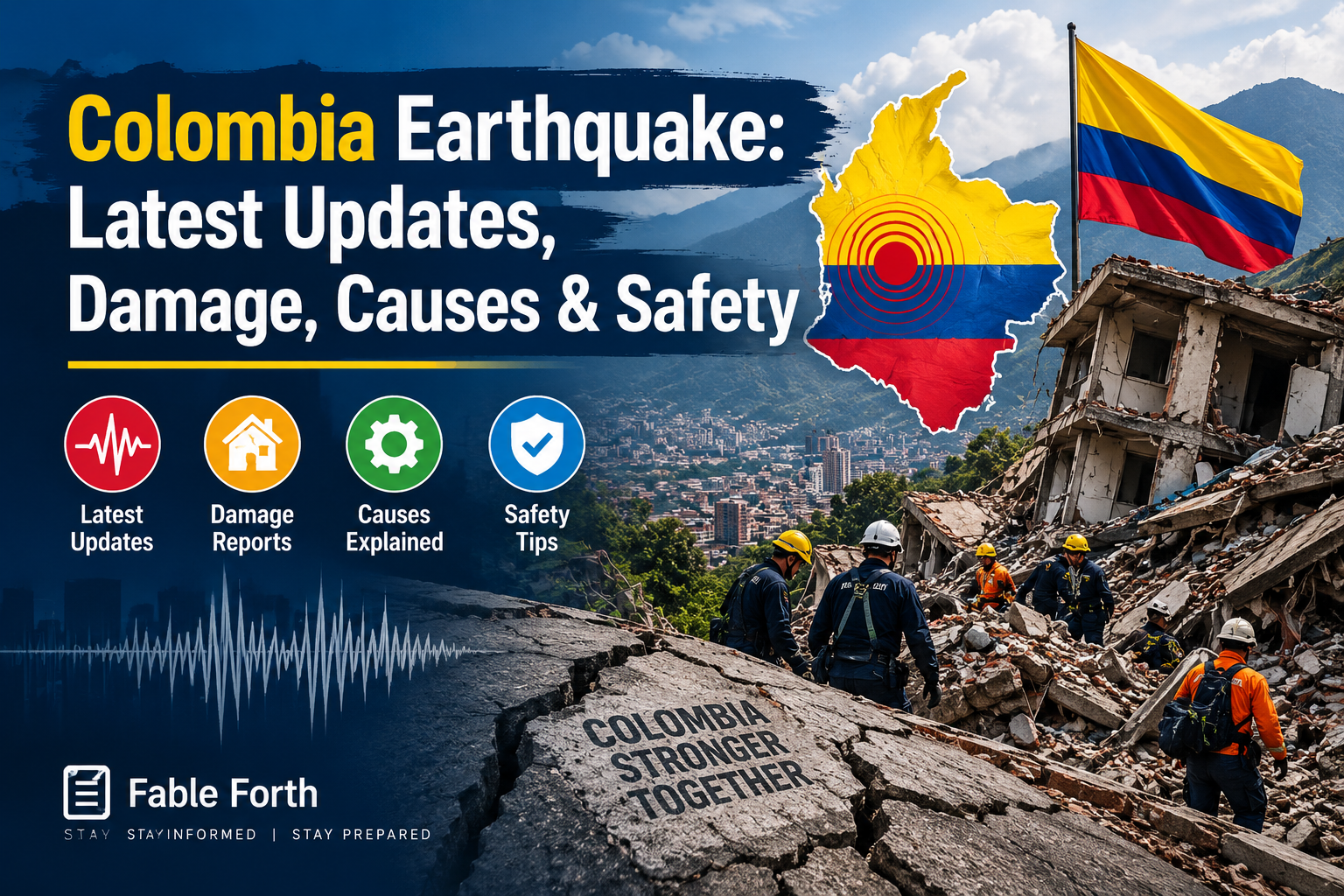
The Colombia earthquake ranks among the worst natural disasters to hit the country in years, making international headlines for its intensity, the extent of damaged buildings, and increasing human casualties. Monday morning’s quake rattled western Colombia, with residents spilling into streets, as rescuers scrambled through partially crumbled structures in search of survivors. The powerful earthquake could be felt in several areas, including the cities of Cali, Pereira, Manizales, and Quibd.
Tremors were also registered in the country’s capital, Bogotá, where residents, fearing for the structural integrity of their buildings, evacuated offices, shopping malls, and houses.
So far, this is what we know about the situation: It’s still ongoing. Rescuers, army soldiers, local volunteers, and doctors continue to work in the affected area, while authorities examine the extent of the destruction of infrastructure, assessing the real scope of damage. Due to accessibility challenges in some areas-most notably parts of the Department of Chocó-it will take time for the real picture to emerge. In this article, we outline everything that happened, where the quake happened, why Colombia earthquake, which regions were impacted, how authorities reacted, and safety measures to be taken for a possible event.
Colombia Earthquake: What Happened?
The big Colombia earthquake that hit the west coast of Colombia on August 10, 2026 The magnitude of 7.4, according to news from Reuters, the strongest this century in the South American nation’s territory, at an approximate depth of 107 kilometers.
The epicenter was located very near San Jose del Palmar, in the department of Choco – a distant region, whose proximity was an additional difficulty for the rescuers who had to reach dispersed villages and assess the affected structures.
But also, the impact reached major populated towns located hundreds of kilometers from the event that registered serious devastation, such as Cali, Pereira, or Manizales.
A large number of buildings destroyed or in danger, broken infrastructure in large cities, health centers that needed attention, and populations in vulnerable zones were what was left after the big news.
What began as another great earthly shake developed immediately into a great emergency.
Latest Colombia Earthquake Death Toll and Damage
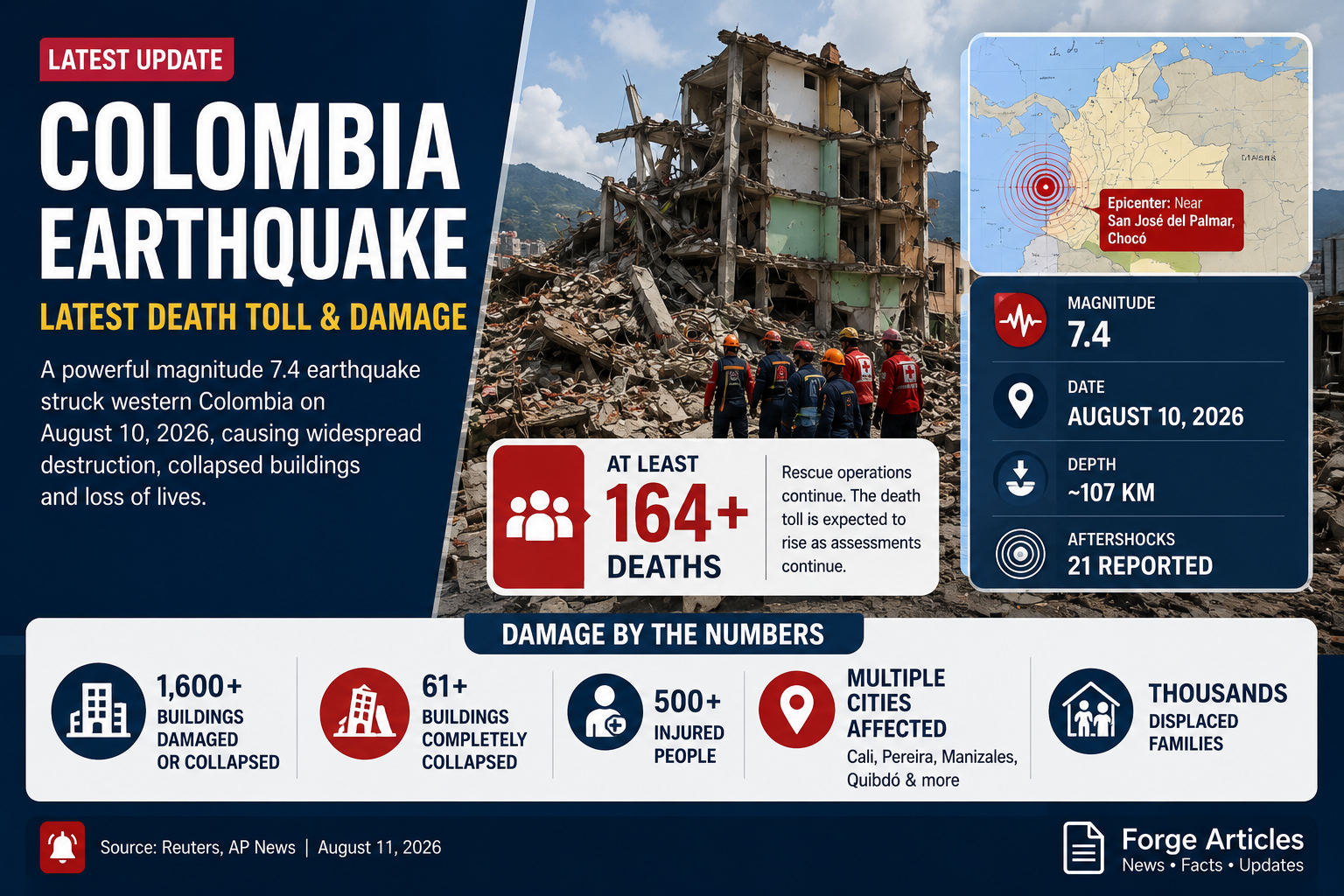
It has been a developing human cost also, with workers gaining access to stricken zones. “The latest death toll is at least 164,” Reuters stated on August 11th. “The authorities still believe there will be more confirmed deaths as the rescue efforts go on.”
Previously, the death toll has been significantly lower. The fact that the toll has jumped is significant as casualty tolls often change very rapidly in large disasters as emergency crews and rescue personnel access difficult-to-reach parts of affected areas and cities verify reports.
The physical damage has been immense. “Nearly 1,600 structures were damaged or destroyed in the Colombia earthquake, with 61 completely flattened,” it is reported by AP.
The city of Cali was badly hit, with the cities of Pereira and Manizales both sustaining fatalities and damage, whilst the disaster in the Choc district was compounded by the extreme remoteness of several villages.
Colombia Earthquake at a Glance
| Detail | Latest reported information |
|---|---|
| Date | August 10, 2026 |
| Magnitude | 7.4 |
| Approximate depth | 107 km |
| Epicentral area | Near San José del Palmar, Chocó |
| Death toll | At least 164 as reported August 11 |
| Major affected cities | Cali, Pereira, Manizales, Quibdó and surrounding areas |
| Buildings affected | Around 1,600 damaged or collapsed |
| Emergency response | Search, rescue, medical aid and security operations |
Because rescue operations are still underway, these figures should be treated as developing information, rather than a final disaster assessment.
Why Was the Colombia Earthquake So Powerful?
Colombia is found in a geologically active region of South America. As is so often the case, this complex location, situated close to many distinct tectonic environments, means that earthquakes will forever be a characteristic feature of the country’s geological development. A report by the Colombian Geological Survey identifies several key earthquake environments in the country.
These include shallow crustal earthquakes, Pacific subduction earthquakes, intermediate depth earthquakes originating from below the west Andes, and deep Colombia earthquake related to the Bucaramanga seismic nest.
This diverse setting is responsible for earthquake events of a diverse range of magnitudes and depths occurring in Colombia. The western portions of the nation in particular will be the areas most strongly affected by the tectonic processes occurring in the Pacific realm, and Colombia sits within the wider seismic domain around the Pacific Ocean that has become widely known as the Ring of Fire.
However, it is a fundamental mistake to assume that the existence of these actively developing geological zones implies an ability to predict the actual timing of an earthquake. Whilst the activity can be measured and estimations of the risk of an Colombia earthquake can be put in place, we possess no reliable technology to tell us where, when, and at what time a significant earthquake will occur.
Where Was the Epicenter?
The eye of this 10 August earthquake was located just offshore San José del Palmar in Choc, some 400km west of the capital, Bogotá. This locality is interesting given that Choc encompasses large portions of mountainous country and the jungle in areas in which moving and speaking by conventional means is already challenging.
Though Bogot wasn’t all that close to the focus, the quake was strong enough for people in Bogot to feel the ground moving under their buildings so that they ran out into the streets.
The worst devastation, though, was much further out to the west.
That spatial distribution of damage provides evidence of why the measurement (magnitude) of an earthquake does not by itself define how it will affect a country; the building construction methods and density, underlying geology, and population, along with the building’s depth and distance from the fault, play major roles in what an earthquake can actually do (Colombia earthquake).
Cities Hit by the Colombia Earthquake
Cali
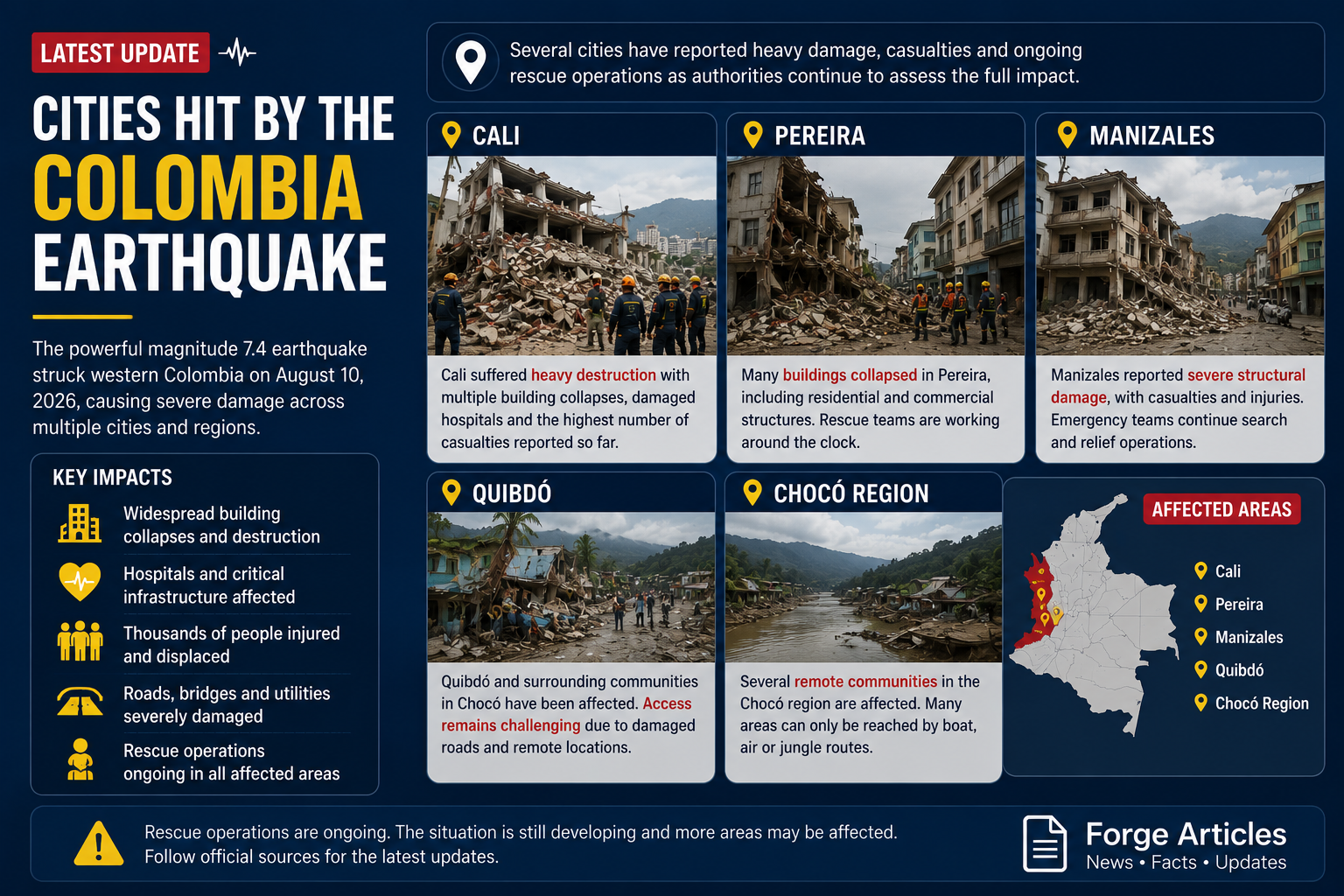
Damage was heavy throughout Cali, one of Colombia’s biggest cities, and rescuers and residents sifted through debris where buildings had collapsed or been destroyed.
In an assessment on the second day of rescue efforts, Reuters described Cali as suffering from a significant proportion of both the deaths and the injuries sustained during the earthquake. A lack of facilities was made worse when some medical structures were themselves affected.
The scenario in Cali is only one example of the greatest difficulties following a significant earthquake; medical facilities need to continue catering for casualties at a time when both the structure and the local transport infrastructure may be severely compromised.
Pereira
Pereira was one of the most affected city areas. Some sections of the city collapsed, and a team of rescue workers was trying to locate any people who may be trapped under the debris.
The area was one of the most critical, and authorities were working together, coordinating rescue missions with the people still suffering damaged property and infrastructure.
Manizales
Colombia’s mountainous coffee-growing area around Manizales also experienced fatalities and destruction of buildings.
The natural tendency to seek shelter on mountain slopes as building damage is possible can result in problems for emergency services on the ground following a severe earthquake.
Quibdó and Chocó
Quibdó and other areas in Chocó were similarly hit. But owing to remoteness, it was more difficult for the authorities to make a clear picture of the devastation, AP said.
The region, in west Colombia, is among the poorest parts of the country, and large areas can be accessed only by boat or jungle pathways.
Rescue Operations Continue
Government organizations, the military, emergency responders, volunteers, and the general public were all involved in the response to the earthquake in Colombia earthquake. Search teams are carefully working through piles of rubble to dig out trapped survivors.
In some sites, community members joined with volunteers to create a “human chain,” removing slabs of concrete and rubble by hand, and this is how often residents become the cornerstone in rescue efforts.
Rescue operations are time-critical, especially the first few days following a major earthquake.
Those buried might survive anywhere between hours and many days, depending on their physical position within the rubble pile, along with the condition and availability of air and other factors.
However, emergency responders need to work with extreme caution because destroyed buildings will often continue to collapse as rescue attempts are underway. Rescue operations pose a significant risk to both trapped survivors and to rescue workers.
Government Declares Emergency
Following the earthquake, the authorities declared a state of national emergency to “expedite relief and reconstruction” in Colombia earthquake and stated that all government resources available were now at the disposal of the government “to save human lives and provide aid” to the affected populations, a government spokesperson told reporters at a press conference.
Additional security measures were also put in place in some affected towns where concerns had been raised about people looting the shops, however. Security was deployed to Cali, and curfews were imposed on areas of damage in some of the affected cities, according to reports by Reuters.
The authorities’ immediate concerns are for the rescue of lives that are believed to still be trapped, to provide medical assistance, to care for those who have been displaced from their homes, and to examine damage to buildings and infrastructure.
It is expected that the recovery effort would not end quickly even after the search and rescue operation came to an end. Rebuilding homes, and hospital, and school infrastructure, or even roads, could take up a number of months or years after an event of this kind.
Why Aftershocks Matter
Earthquakes almost always generate aftershocks of lesser magnitudes as the earth’s crust settles down from the primary quake. Following Monday’s large one, there have been as many as 21 aftershocks as of Monday night, Reuters said.
“However, you have to be careful returning to buildings after a major earthquake, as even a small aftershock could bring down an already-weakened structure,” experts warned.
What People Should Do During an Earthquake
The best defenses against a Colombia earthquake start long before the ground trembles; families, businesses and schools all can cut risks and help protect themselves by knowing where to retreat to for safety and by having a plan to stay in touch during the disaster.
Drop, Cover and Hold On-The phrase for best safety practices during a quake of any magnitude, the method is, quite literally, to get yourself flat, covering yourself when practical-often at your workplace or school classroom- under a durable piece of furniture.
Running from a building during the initial shaking is rarely advisable, since fallen debris, shattering glass and the possibility of your building’s eventual collapse can be far riskier in themselves, depending on the forces.
Important Earthquake Safety Steps
- Drop, cover, and hold on during strong shaking.
- Stay away from windows and objects that may fall.
- Do not use elevators during an earthquake.
- After shaking stops, check for injuries and immediate hazards.
- Follow instructions from local emergency authorities.
- Avoid entering visibly damaged buildings.
- Keep emergency supplies available whenever possible.
- Be prepared for aftershocks.
Preparedness cannot prevent an earthquake, but it can reduce injuries and help communities respond more effectively.
How Technology Helps During Earthquakes
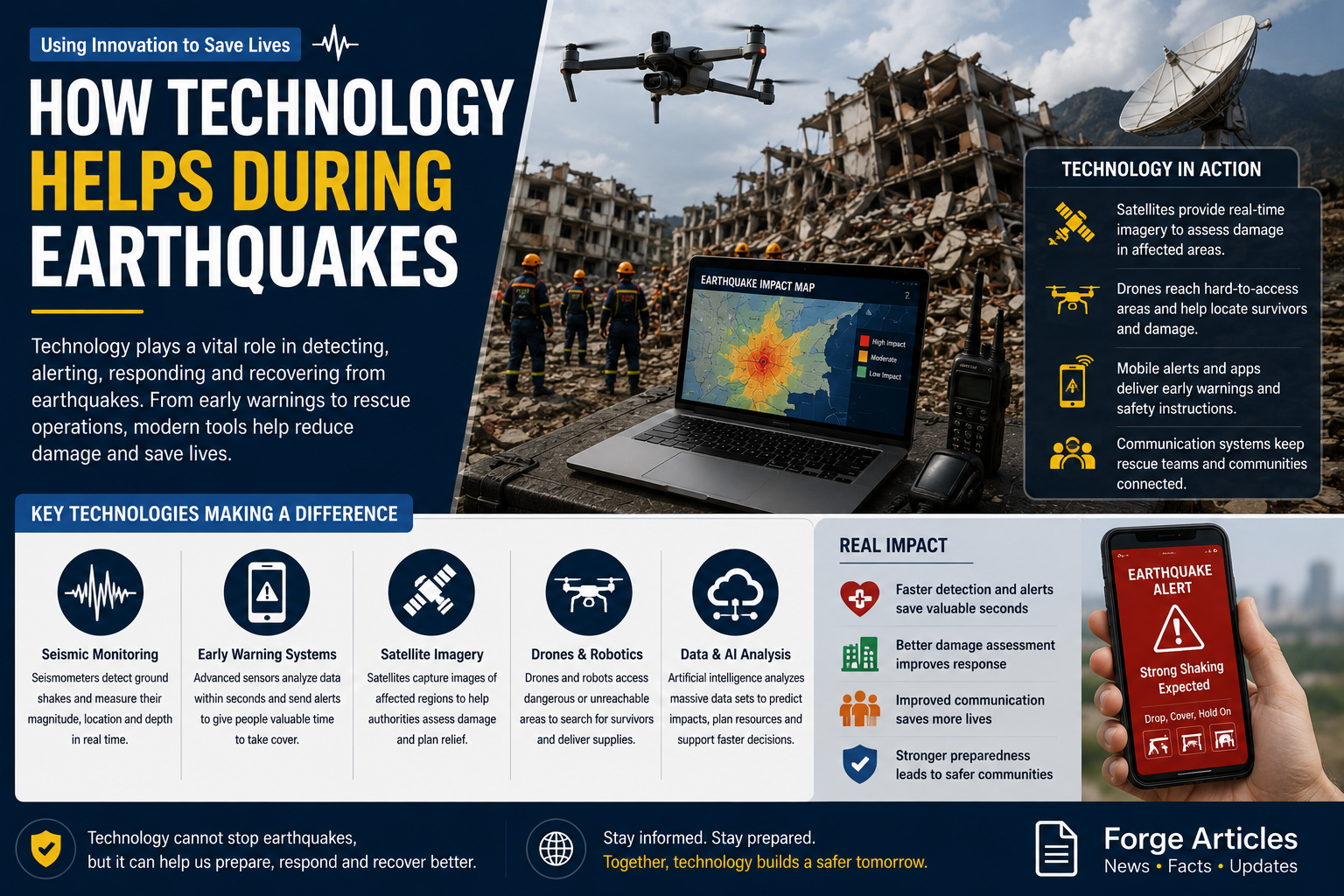
Nowadays, some new technologies are essential for monitoring earthquakes and responding to natural disasters. Seismic networks can measure ground motion and allow seismologists to locate an earthquake, pinpoint its depth, and provide an estimate of its magnitude.
Colombia’s Servicio Geológico Colombiano (SGC) maintains seismic monitoring systems, collecting earthquake data throughout Colombia. In addition, the agency developed interactive maps where citizens can report (Colombia earthquake) they experience, enabling researchers to assess the felt shaking intensity of an event at a particular location.
Technology is also revolutionizing emergency response efforts: the use of satellite images enables authorities to identify which areas are damaged, while drones can offer aerial perspectives of dangerous or inaccessible locations, permitting rescuers to know better where and what to find.
Both mobile communication networks and the web allow families to track down loved ones and share relevant information; still, individuals need to consult authoritative channels. The truthfulness of reports can decline rapidly in the face of major natural events: not only genuine information travels through media, but sometimes fabricated news and false testimonies will too.
Colombia’s Earthquake History
Colombia earthquake: This latest earthquake has once again raised awareness around what to do in the event of strong shaking, and whether structures around the country can withstand it depending on varying strength levels of concrete, or building styles in areas near to faults.
Colombia earthquake, Colombia is far from unfamiliar to having the ground beneath its feet begin to violently move, having had multiple significant earthquakes throughout its history. One of the most recent prominent was the 1999 Armenia earthquake, a catastrophic event which brought widespread destruction to one of their coffee-producing regions and remains one of the most significant natural disasters recorded in modern Colombia.
Historical Colombia earthquake data offers insights to engineers and seismologists as well, to better identify and prepare for further risks that the country faces.
To get this better data, the Colombian Geological Survey has built a huge library of seismic data and research on earthquake events throughout the nation.
How Scientists Monitor Earthquakes in Colombia
Colombia earthquake: To study an earthquake, we need an array of specialized instruments to detect these subtle movements of the Earth’s crust. A seismometer records ground motion and can provide researchers with critical information about an earthquake.
These are just a few of the measurements researchers obtain about an earthquake depending on the scenario: its magnitude, depth and epicentral location, and intensity.
Since 1993, the Colombian Geological Service has operated a national seismic network; its stations are particularly important in key areas across the country such as Bogotá, Cali, Medellín, Bucaramanga, Pasto and Pereira.
Monitoring Colombia earthquake is an important aspect not only after a large earthquake event, but is an ongoing monitoring process to assess long-term hazard.
Can Scientists Predict the Next Colombian Earthquake?
One of the most frequently asked questions following a significant earthquake.
No, the simple answer is they can’t. Scientists can explain the regions in which Colombia earthquake are likely over a longer time span, but they can’t say for sure when any specific major earthquake will occur.
The distinction is important because much false information based on an “imminent earthquake” claim often circulates on social media – this cannot be relied upon unless it is from an established scientific geological or emergency agency.
Aftershocks will follow, as they always do, but we can’t predict when or how large they will be.
Preparedness is the keynote when you cannot predict:
What Happens After the Rescue Phase?
The conclusion of the immediate rescue phase, of course, does not bring disaster to an end. In most communities shaken by an earthquake, the most taxing work is yet to come.
Communities might lose homes, businesses might close down (at least for a time), and hospitals or schools could face substantial repair work. Utilities networks and roadways too may well have suffered extensive damage. Individual buildings will need to be assessed and classified as reparable, or likely to be torn down. People whose homes are no longer safe may well require temporary accommodation arrangements.
Economic recovery is sure to be tough, as businesses within the zone could find that both stocks, premises and custom have evaporated, while the workforce might temporarily run out of any means of earned income. Any lasting recovery following the Colombia quake will accordingly need to go far beyond emergency aid.
Colombia Earthquake and the Importance of Preparedness
Colombia earthquake- This recent earthquake helps teach that preparing for disaster does not solely fall upon the government. It also falls on each individual, family, business, and community to do their part in preparing for such events.
Having readily available emergency supplies, knowledge of emergency evacuation procedures, and basic earthquake safety can play such an important role when a disaster strikes.
Although technology can provide emergency notification and information, it is useless without understanding how to interpret it or when to take immediate action.
For Colombia, this recent disaster could potentially also bring back the discussion of the building codes, emergency planning, and infrastructure robustness.
Frequently Asked Questions
When did the Colombia earthquake happen?
Colombia earthquake: The major earthquake struck western Colombia on August 10, 2026. It was reported as a magnitude 7.4 event and caused widespread damage across several western regions.
How strong was the Colombia earthquake?
Colombia earthquake: The earthquake had a reported magnitude of 7.4. Reuters described it as the strongest earthquake recorded in Colombia during the 21st century.
Where was the Colombia earthquake centered?
The epicenter was near San José del Palmar in the Chocó region of western Colombia.
How many people died in the Colombia earthquake?
As of August 11, Reuters reported at least 164 deaths, while rescue operations were continuing and authorities expected the number to change.
Which Colombian cities were affected?
Cali, Pereira, Manizales and Quibdó were among the cities and communities affected. Damage was also reported across surrounding areas, including parts of Chocó.
Were aftershocks reported?
Yes. Reuters reported that 21 aftershocks had occurred by Monday night following the main earthquake.
Can another major earthquake happen in Colombia?
Colombia earthquake: Colombia is a seismically active country, so future earthquakes are possible. However, scientists cannot reliably predict the exact time or location of the next major earthquake.
What should people do during an earthquake?
The standard safety guidance is to Drop, Cover, and Hold On during strong shaking. People should stay away from windows and falling objects and follow instructions from local emergency authorities.
Final Thoughts
The magnitude 7.4 August 10, 2007, Colombia earthquake caused a large-scale humanitarian and infrastructure crisis in western Colombia. Due to the heavy construction damage and ever-changing fatality rates, it has become one of the worst earthquakes in the country’s recent history.
The immediate task is quite evident: rescue victims, care for the wounded, provide care for displaced families, and ensure safety in the heavily affected regions. In parallel, the crisis serves to present one larger lesson about earthquake preparedness: because of Colombia’s geology, Colombia earthquake risks cannot be entirely prevented, yet good construction, efficient emergency systems, and awareness at the public level may decrease the impact.
Colombia earthquake: Since rescue and evaluation operations are still ongoing, information will continue to be updated. Therefore, readers are advised to trust the Servicio Geológico Colombiano, local emergency services, and well-regarded news outlets for the latest confirmed information, versus posts on social networking sites.
Furthermore, in Colombia earthquakes, the quake shows the importance of technology and science. Seismically monitoring networks, efficient emergency communications systems, and assessment technologies that rely on satellites are all available for faster response throughout afflicted communities, but only when they are not limited to the help of the public and are in connection with practical preparedness.
To all observing this quake: the main thing to do is to stay informed, refrain from distributing unsubstantiated reports, and obey all safety procedures issued by authorities.
