


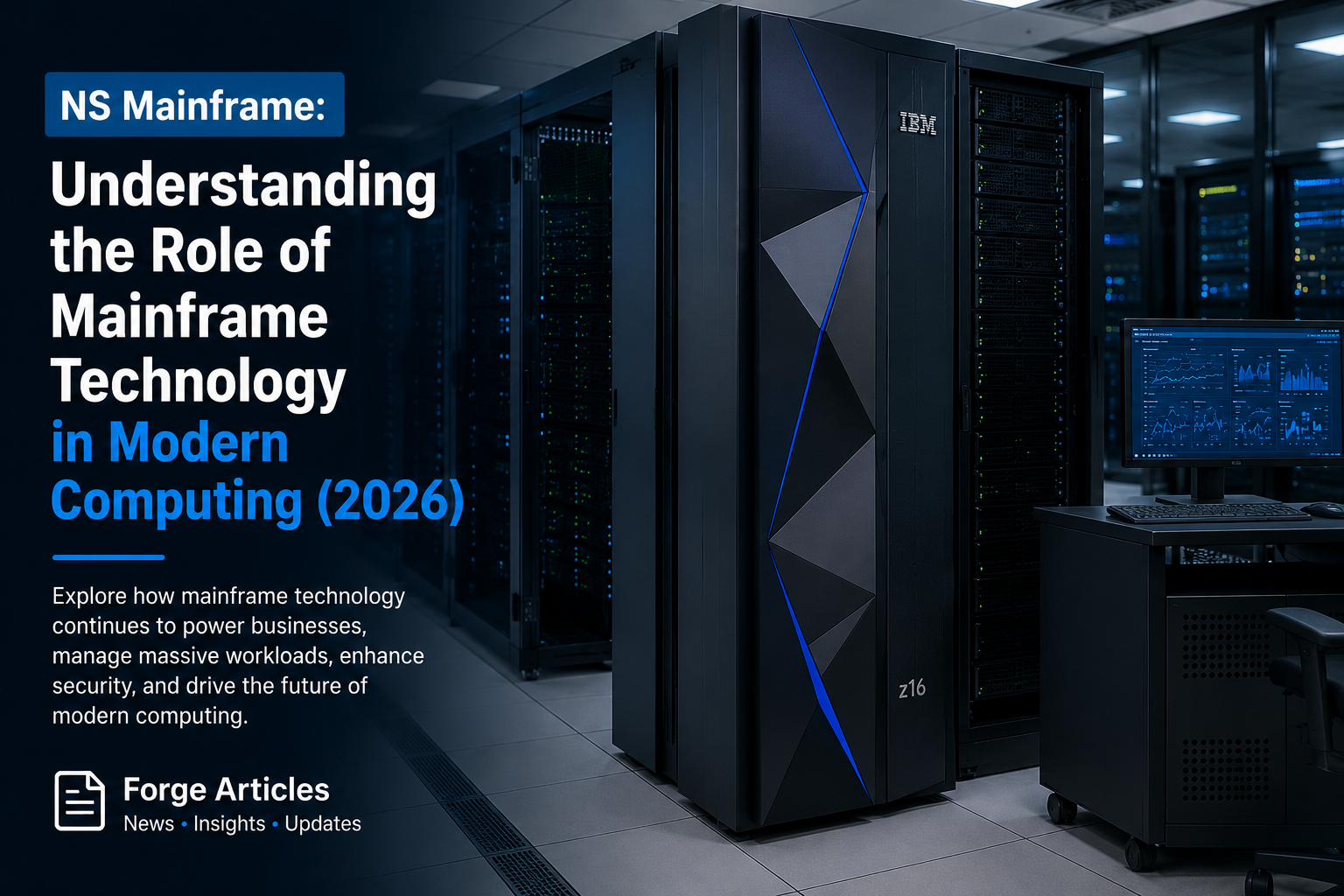
Mainframe technology has been a significant part of the history of modern computer development. Despite the advancements made in the field, such as cloud computing and distributed systems, big iron remains the backbone of enterprises that require the highest level of reliability and security, alongside processing immense amounts of data. Hence, the NS mainframe is a concept that fits right into the topic of modern computer development and the necessity of big iron in the current corporate landscape.
What Is NS Mainframe?
NS mainframe is the central processing concept related to enterprise computing and large-scale data processing. Mainframes represent huge computers that perform data-processing tasks with the highest reliability and availability.
Unlike regular personal computers, mainframes are typically built to withstand the most strenuous operating environments while delivering the highest performance. Moreover, they ensure that the heaviest loads, such as thousands or even millions of financial transactions, are handled with the highest level of reliability. The most critical data-processing tasks are therefore delegated to mainframes in order to guarantee their uninterrupted functioning. The heaviest loads, such as thousands or even millions of financial transactions, are handled with the highest level of reliability.
Why Mainframes Remain Important
The relevance of NS mainframe technology is hard to overestimate due to its ability to meet the demands of enterprises that seek to operate large-scale transactions, remain available 24/7 and ensure the safety of sensitive data.
The mainframe is considered as the technology that helps enterprises to accommodate thousands or even millions of users per second without sacrificing performance. Such a level of service availability is critical for organizations that cannot afford to lose even a second of operation in terms of processing transactions.
Security and Reliability
Security is one of the leading concerns in enterprise computing. Users dealing with financial records, customer data, and other valuable information have to ensure that their data is protected
In that regard, the NS mainframe concept deals with the broader aspects related to the mainframe environment where security is one of the key aspects. Mainframe installations typically involve a suite of products developed to ensure that data and programs are protected and reliable
At the same time, reliability is another critical aspect of enterprise computing. Modern organizations can be highly dependent on IT systems that have to operate 24/7.
Processing Large Amounts of Data
Modern organizations produce an unprecedented amount of data. The bank processes transactions, the store has information about customer purchases, the airline keeps track of reservations, and government agencies maintain countless databases.
The NS mainframe approach is viewed in this context of volume-intensive computing environments. They excel at supporting organizations where a high percentage of business processes involve the high-speed, high-volume transaction processing of structured data.
These systems offer the business benefits of high throughput, reliability, and efficiency in performing these types of tasks that would overwhelm conventional PC-based systems.
Mainframes and Modern Technology
It is a common misconception that mainframes are dying due to the advent of cloud technologies and other modern infrastructure. In truth, there is a path for the co-existence of mainframes and newer technologies
The NS mainframe concept provides value to organizations that wish to both retain legacy enterprise applications and participate in the cloud, APIs, automation, and modern development practices
Many enterprises are choosing to modernize their mainframe environments instead of discarding them due to the complexity and risk of replacement. This results in hybrid approaches where new applications and digital channels are being connected to the mainframe.
The Future of Mainframe Computing
As technology advances, so do the capabilities of the mainframe. Today’s mainframe environment allows for the execution of enterprise-class transactions, virtualization, analytics, automation, and integration with modern technologies.
For organizations with intensive transaction-processing needs, the NS mainframe model addresses the question of why centralization of enterprise computing is appropriate (or necessary) by illustrating how the combination of reliable systems and modern technology can satisfy the need for legacy systems that still dominate corporate IT infrastructures.
Final Thoughts
Mainframe computers are a significant part of the global technology universe. Its capacity to offer reliability, security, power, and scalability is critical, as well as the ability to process high volumes of transactions.
By examining the NS mainframe within the context of this technology ecosystem, one can better understand the rationale behind the continued existence of such systems, as well as their co-existence with other paradigms, including the cloud, and distributed computing. In other words, the mainframe is not dead; instead, it continues to evolve to meet the needs of the modern business environment.
